My practice begins with embodiment. The body is not a stable human centre, but a situated and temporal position reorganised by signs, interfaces, machines, data and institutions. Earlier works examine how technical mediation changes perception and how nonhuman actors participate in action. Recent research turns to protocol: how these relations become executable rules. I use human undecidability as a working term for the interval in which a person’s intention has not yet settled into a decision, although a system is already required to continue. This Journal follows that conceptual movement rather than a chronology.
Exhibitions and projects
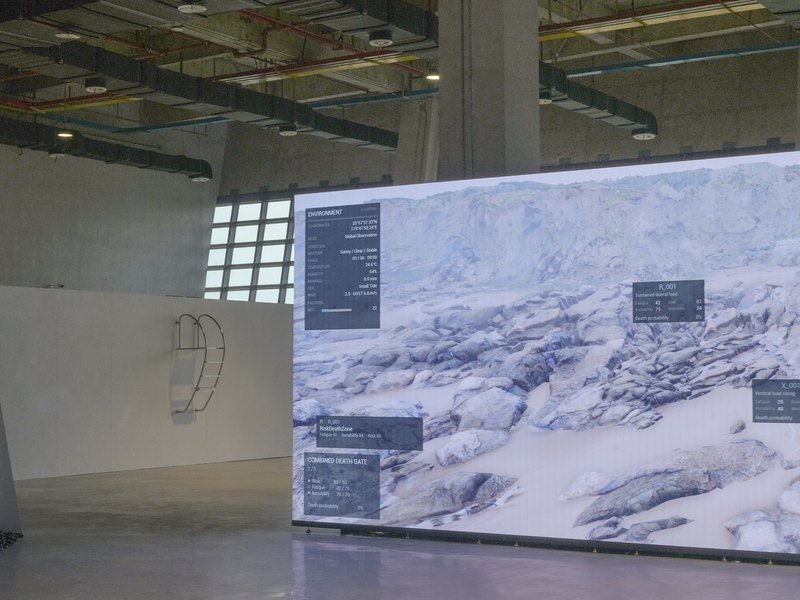 Late Flow Residency: Down Beneath the Cliff
Residency Record, 2026
In 2026, Ruoxi Ren and Xue Jun, with independent curator Deng Ting, spent three months in Fuzhou on the Late Flow Young Artist Residency Program, organized by NetDragon Websoft with academic support from the Central Academy of Fine Arts. The residency phase is complete. It produced Down Beneath the Cliff in two forms: an experimental game and an installation, documented in the organizer’s publication of 20 September 2026.
Read
Late Flow Residency: Down Beneath the Cliff
Residency Record, 2026
In 2026, Ruoxi Ren and Xue Jun, with independent curator Deng Ting, spent three months in Fuzhou on the Late Flow Young Artist Residency Program, organized by NetDragon Websoft with academic support from the Central Academy of Fine Arts. The residency phase is complete. It produced Down Beneath the Cliff in two forms: an experimental game and an installation, documented in the organizer’s publication of 20 September 2026.
Read
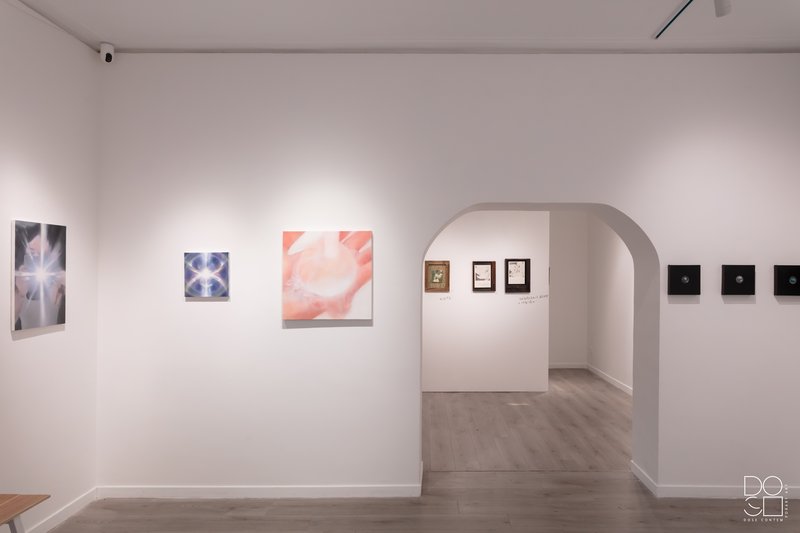 Where Warmth Is Spoken, Melting Is the Tone
Exhibition Record, 2025
In Where Warmth Is Spoken, Melting Is the Tone, a group exhibition at DOSE Contemporary Art in Shanghai curated by Yuqing Shen and Chaoyi Wu, Ruoxi Ren’s light paintings were shown alongside works by Xi Chen, Bin Zhang and Justhehe. Chaoyi Wu’s exhibition text reads her paintings as light built from the logic of digital images rather than observed in nature.
Read
Where Warmth Is Spoken, Melting Is the Tone
Exhibition Record, 2025
In Where Warmth Is Spoken, Melting Is the Tone, a group exhibition at DOSE Contemporary Art in Shanghai curated by Yuqing Shen and Chaoyi Wu, Ruoxi Ren’s light paintings were shown alongside works by Xi Chen, Bin Zhang and Justhehe. Chaoyi Wu’s exhibition text reads her paintings as light built from the logic of digital images rather than observed in nature.
Read
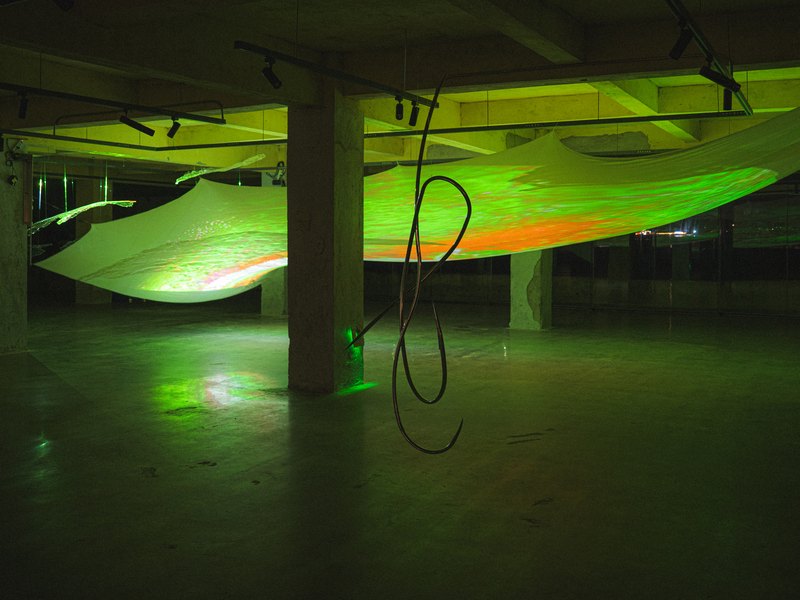 The Kiss of the Lure at Float Site
Exhibition Record, 2025
The Kiss of the Lure: Immersive Installation Theatre, by Ruoxi Ren and Xue Jun, opened at the Confluence Gallery, Float Site, Quanzhou, during the 2025 fishing season. Starting from the lamps that lure squid to the surface on summer nights, the three works look at phototaxis as a shared structure of perception between squid and people.
Read
The Kiss of the Lure at Float Site
Exhibition Record, 2025
The Kiss of the Lure: Immersive Installation Theatre, by Ruoxi Ren and Xue Jun, opened at the Confluence Gallery, Float Site, Quanzhou, during the 2025 fishing season. Starting from the lamps that lure squid to the surface on summer nights, the three works look at phototaxis as a shared structure of perception between squid and people.
Read
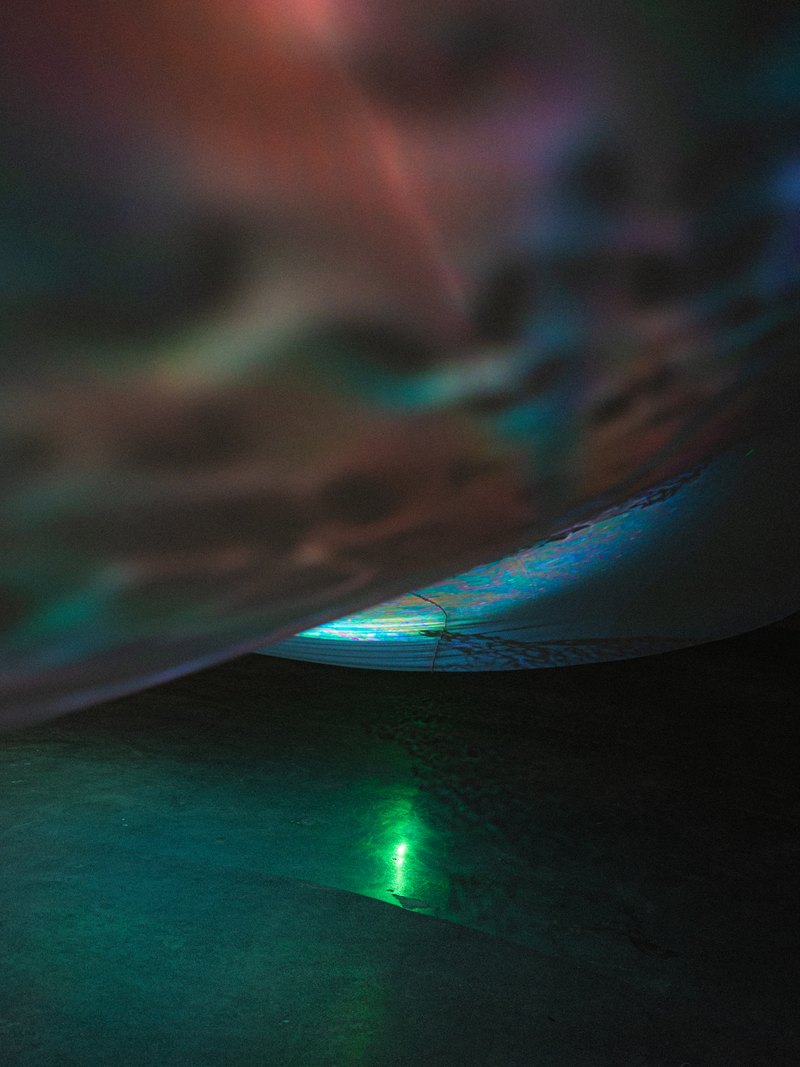 Artist’s Notes: The Lure
Writing, 2025
Written by the two artists for The Kiss of the Lure at Float Site, Quanzhou, these notes describe the exhibition as a summoning of “wet being”: a space where light, sound, scent and technology shape perception, and where the viewer becomes one disturbance among many in an ecological network.
Read
Artist’s Notes: The Lure
Writing, 2025
Written by the two artists for The Kiss of the Lure at Float Site, Quanzhou, these notes describe the exhibition as a summoning of “wet being”: a space where light, sound, scent and technology shape perception, and where the viewer becomes one disturbance among many in an ecological network.
Read
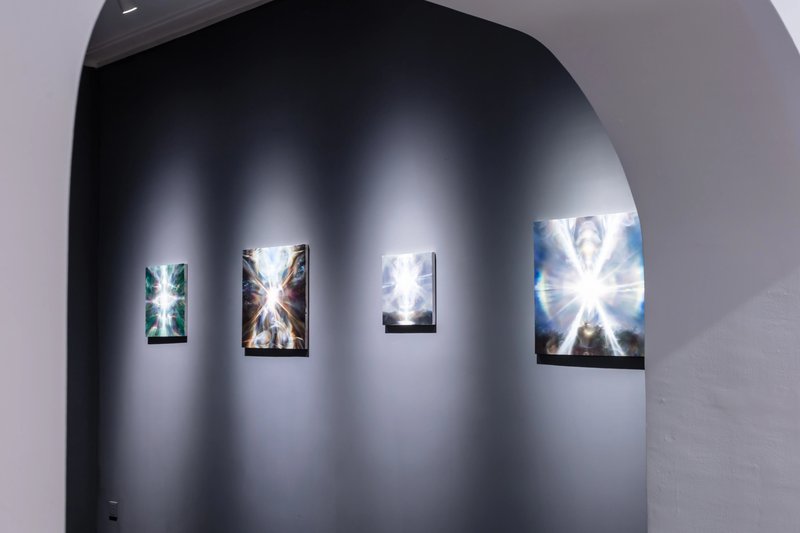 Summon in State of Ecstasy
Exhibition Record, 2025
Ruoxi Ren’s Summon was presented in State of Ecstasy, a 2025 group exhibition curated by Yang Dan and Chen Qian for the Young Artist Support Program of the China Shanghai International Arts Festival. The painting brings machine vision and human visual experience into the same material surface. Its radiating, digitally inflected light is not an illustration of a real optical event, but a sign that remains legible to both human viewers and image-processing systems.
Read
Summon in State of Ecstasy
Exhibition Record, 2025
Ruoxi Ren’s Summon was presented in State of Ecstasy, a 2025 group exhibition curated by Yang Dan and Chen Qian for the Young Artist Support Program of the China Shanghai International Arts Festival. The painting brings machine vision and human visual experience into the same material surface. Its radiating, digitally inflected light is not an illustration of a real optical event, but a sign that remains legible to both human viewers and image-processing systems.
Read
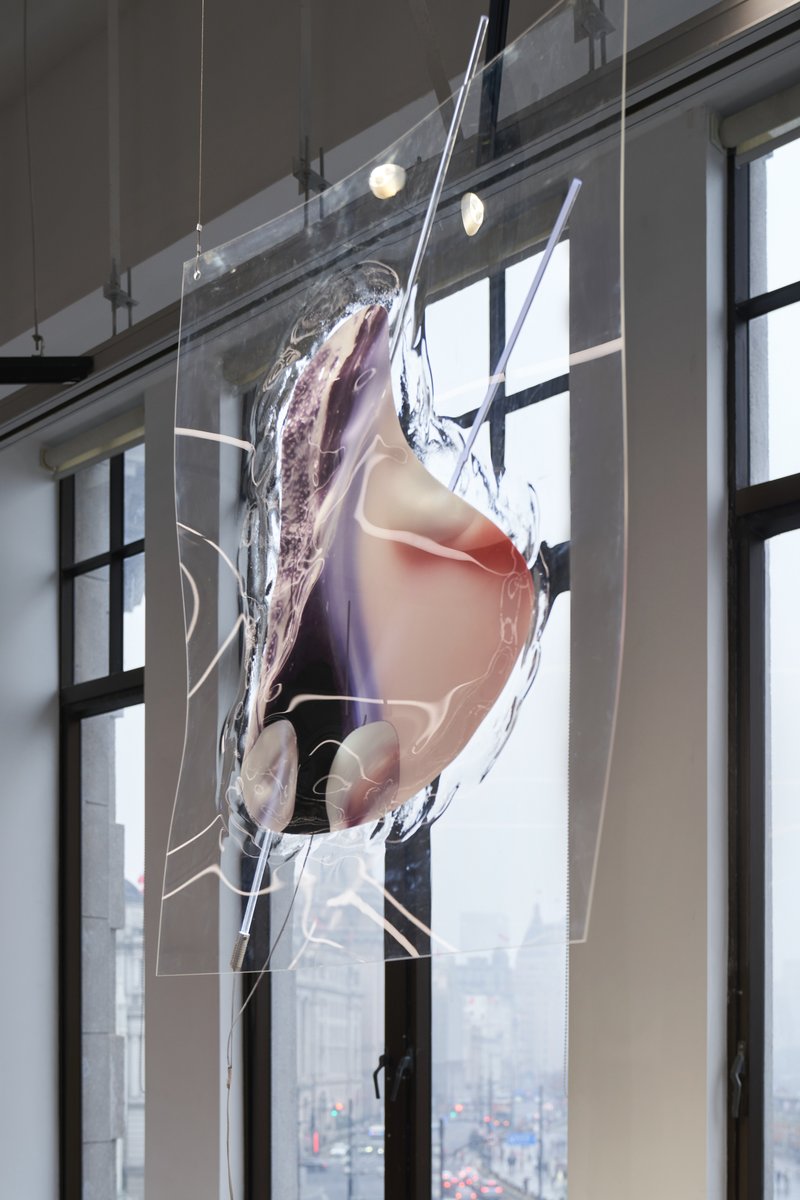 Electronic Eucharist: A Carbon–Silicon Body
Work / Exhibition Record, 2024
Electronic Eucharist is an installation series begun by Ruoxi Ren in June 2023. Using tactile surfaces and components associated with electronic production, the work imagines an invisible communication system in which carbon-based bodies and silicon-based infrastructures become mutually dependent. Works from this research were later presented in the 2024 group exhibition The Great Manual of (Post) Human Anatomy at Hanart TZ Gallery, Hong Kong.
Read
Electronic Eucharist: A Carbon–Silicon Body
Work / Exhibition Record, 2024
Electronic Eucharist is an installation series begun by Ruoxi Ren in June 2023. Using tactile surfaces and components associated with electronic production, the work imagines an invisible communication system in which carbon-based bodies and silicon-based infrastructures become mutually dependent. Works from this research were later presented in the 2024 group exhibition The Great Manual of (Post) Human Anatomy at Hanart TZ Gallery, Hong Kong.
Read
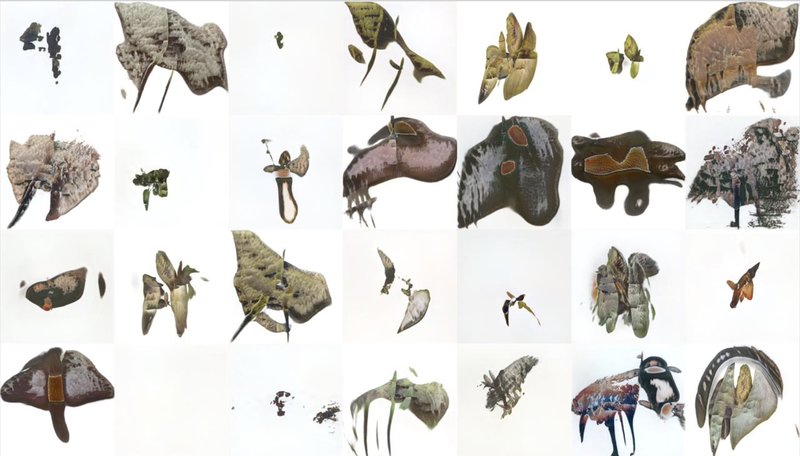 Infinity Species Generator at Ars Electronica
Work / Exhibition Record, 2020
Infinity Species Generator (listed by the festival as Infinite Species Generator) is an interactive website by Ruoxi Ren presented in Transformation & Transmission, an online exhibition within Ars Electronica’s 2020 In Kepler’s Gardens programme. Drawing from biological image databases and machine-learning processes, the site generated a new artificial species image and name every nineteen minutes. The project asked how computation might not simply classify existing life, but produce speculative ecologies that disturb the boundary between database, organism and image.
Read
Infinity Species Generator at Ars Electronica
Work / Exhibition Record, 2020
Infinity Species Generator (listed by the festival as Infinite Species Generator) is an interactive website by Ruoxi Ren presented in Transformation & Transmission, an online exhibition within Ars Electronica’s 2020 In Kepler’s Gardens programme. Drawing from biological image databases and machine-learning processes, the site generated a new artificial species image and name every nineteen minutes. The project asked how computation might not simply classify existing life, but produce speculative ecologies that disturb the boundary between database, organism and image.
Read
Teaching
 AI Life-Objects: Three Ontological Shifts
Teaching / Research Method, 2026
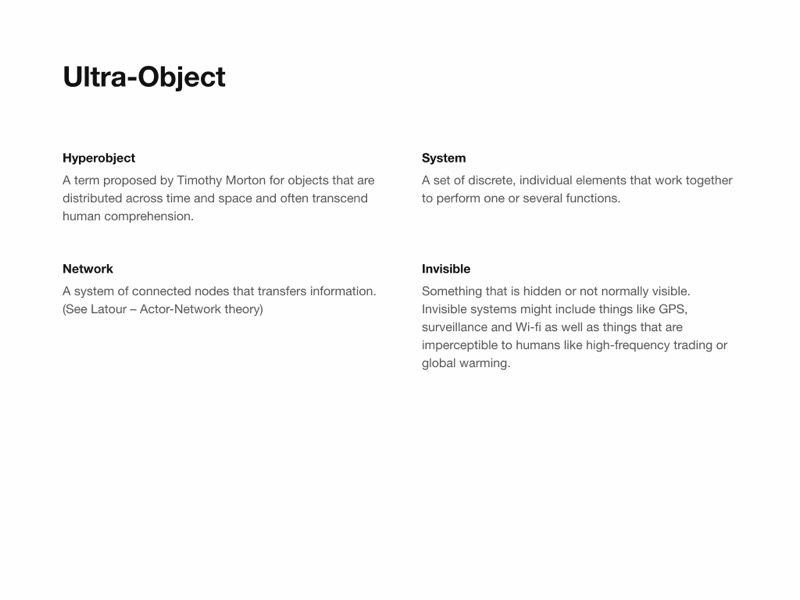
AI Life-Objects is a course Ruoxi Ren taught in 2026 for undergraduate sculpture students at the Central Academy of Fine Arts. It sets aside the two usual answers to AI, learning to use it or resisting it, because both treat AI as a tool. Instead it studies AI as a “life-object”: not alive or conscious, but, like a living thing, sustained by matter, energy and relations and always changing. Her essay follows three shifts, asking what AI is made of, what relations hold it together and how it acts, and ends in the course’s two assignments: tracing an Ultra-Object through diagrammatic thinking, and making work with AI through Vibe Coding.
Read
AI Life-Objects: Three Ontological Shifts
Teaching / Research Method, 2026
AI Life-Objects is a course Ruoxi Ren taught in 2026 for undergraduate sculpture students at the Central Academy of Fine Arts. It sets aside the two usual answers to AI, learning to use it or resisting it, because both treat AI as a tool. Instead it studies AI as a “life-object”: not alive or conscious, but, like a living thing, sustained by matter, energy and relations and always changing. Her essay follows three shifts, asking what AI is made of, what relations hold it together and how it acts, and ends in the course’s two assignments: tracing an Ultra-Object through diagrammatic thinking, and making work with AI through Vibe Coding.
Read
 The Desire Behind Artificial Objects
Teaching / Participatory Method, 2025
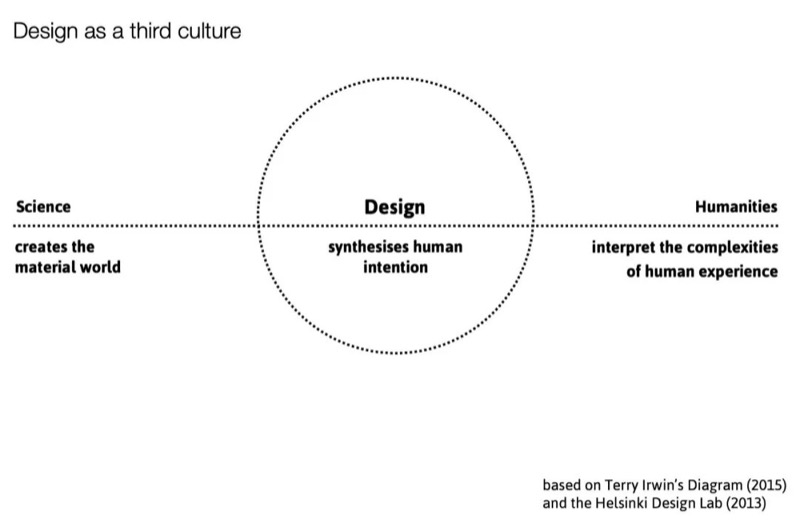
The Desire Behind Artificial Objects was the fifth topic of The Physical Practice of Concepts, a course Ruoxi Ren taught at the Central Academy of Fine Arts in 2024. Starting from the idea that designed things materialise desire and power, the class read Baudrillard, Lefebvre and Heidegger alongside critical, speculative and discursive design, then held a two-hour role-play in which each participant spoke as an artificial object, opening with the line “Without desire, I am nothing…”. This is the full text of her article, first published on WeChat in January 2025, including excerpts from the role-play.
Read
The Desire Behind Artificial Objects
Teaching / Participatory Method, 2025
The Desire Behind Artificial Objects was the fifth topic of The Physical Practice of Concepts, a course Ruoxi Ren taught at the Central Academy of Fine Arts in 2024. Starting from the idea that designed things materialise desire and power, the class read Baudrillard, Lefebvre and Heidegger alongside critical, speculative and discursive design, then held a two-hour role-play in which each participant spoke as an artificial object, opening with the line “Without desire, I am nothing…”. This is the full text of her article, first published on WeChat in January 2025, including excerpts from the role-play.
Read
 Semiotics: Semantics and Pragmatics
Teaching / Research Method, 2024
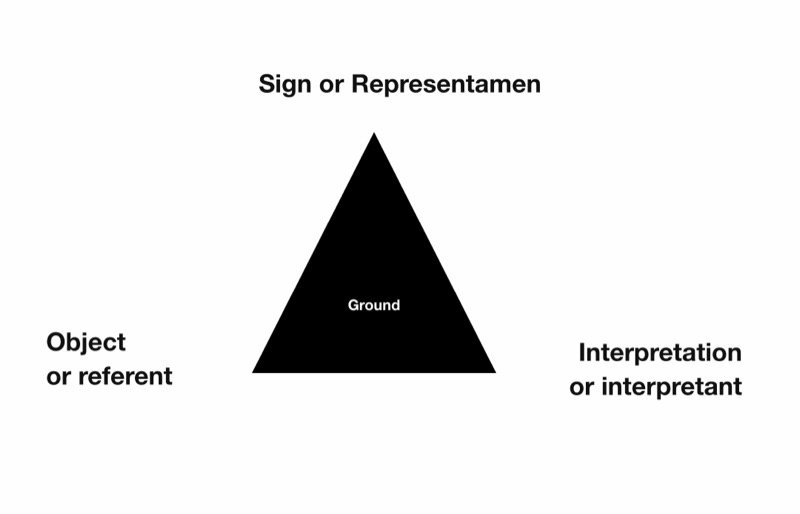
Semiotics: Semantics and Pragmatics was the second topic of The Physical Practice of Concepts, a course Ruoxi Ren taught at the Central Academy of Fine Arts in 2024. Her text begins with two physical media separated by millennia, the Phaistos Disc and NASA’s Voyager Golden Record, and asks what signs mean for artists who grew up perceiving the world through screens. The class read Peirce’s icon, index and symbol and his triadic sign process, then each student built a sign system of their own. This is the full text of her article, first published on WeChat in November 2024.
Read
Semiotics: Semantics and Pragmatics
Teaching / Research Method, 2024
Semiotics: Semantics and Pragmatics was the second topic of The Physical Practice of Concepts, a course Ruoxi Ren taught at the Central Academy of Fine Arts in 2024. Her text begins with two physical media separated by millennia, the Phaistos Disc and NASA’s Voyager Golden Record, and asks what signs mean for artists who grew up perceiving the world through screens. The class read Peirce’s icon, index and symbol and his triadic sign process, then each student built a sign system of their own. This is the full text of her article, first published on WeChat in November 2024.
Read