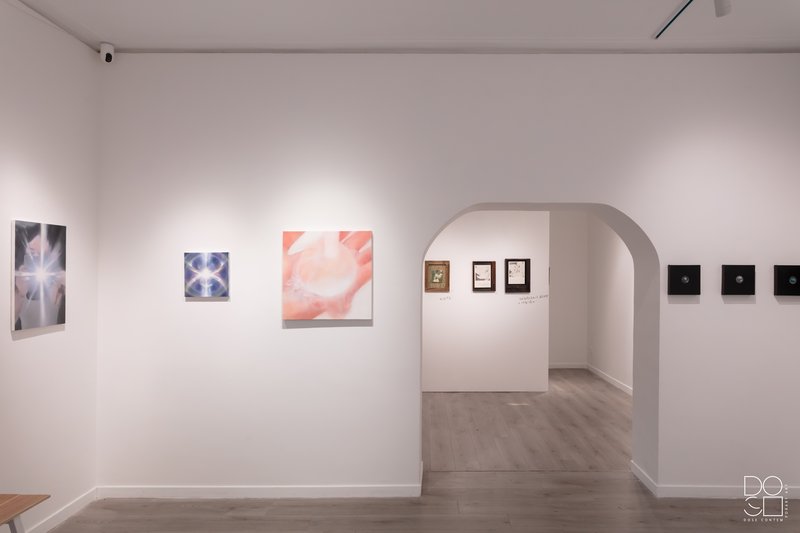
Where Warmth Is Spoken, Melting Is the Tone brought together four artists, Xi Chen, Ruoxi Ren, Bin Zhang and Justhehe, at DOSE Contemporary Art, Shanghai, from 27 December 2025 to 1 February 2026. The curators, Yuqing Shen and Chaoyi Wu, framed the exhibition around a time of information overload and fragile connection, and around small, persistent practices through which each artist keeps hold of an inner light.
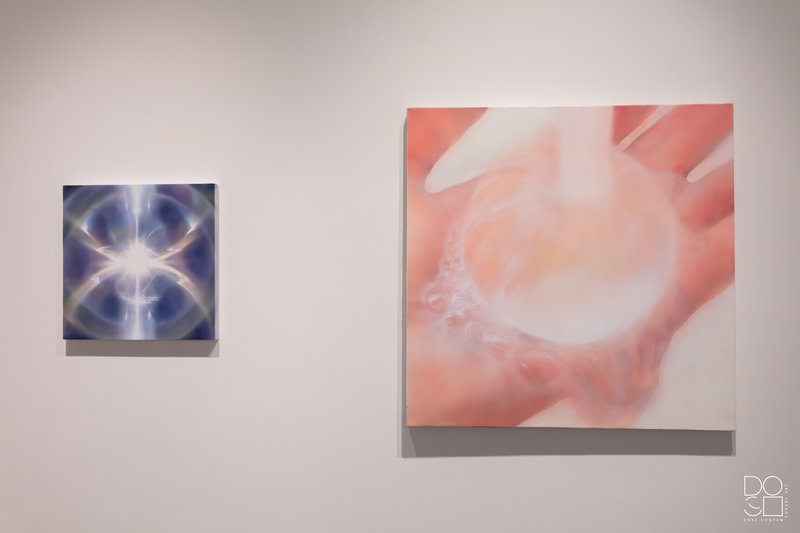
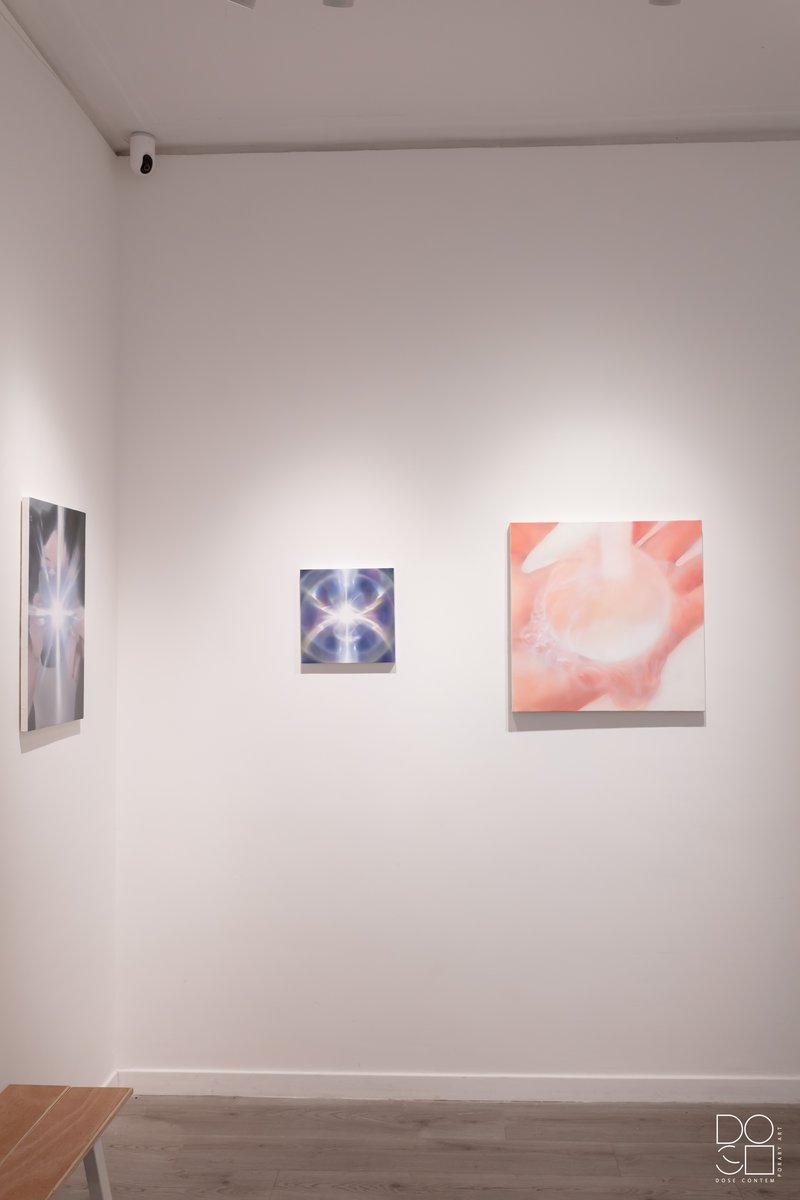
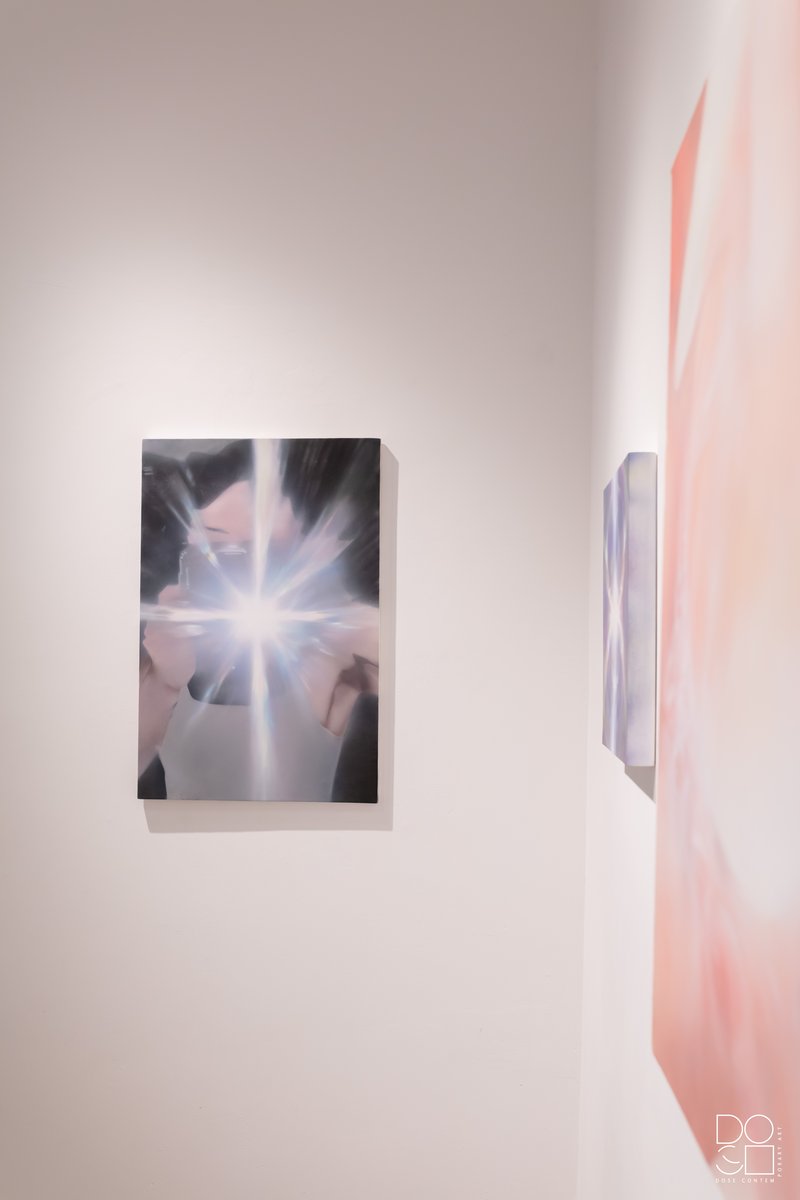
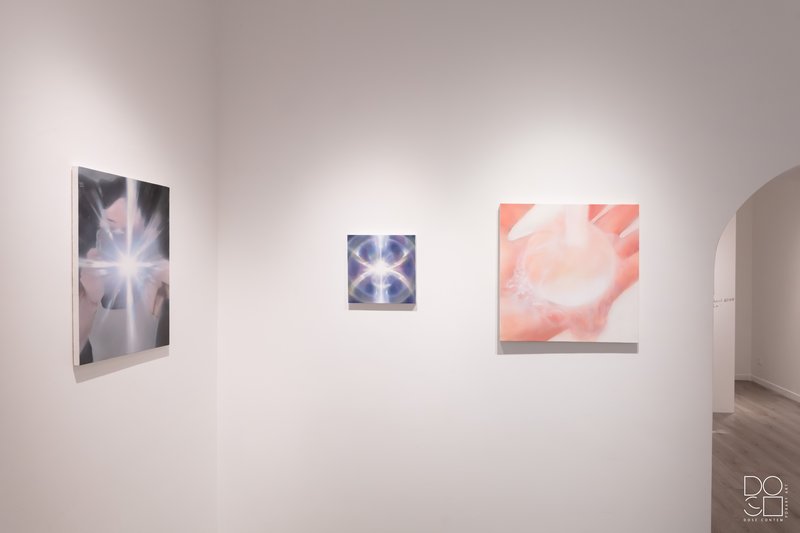
Ren showed three paintings: I have infinite tenderness for you (2023, acrylic on canvas), and two works from the Summon series, Summon – Wear A Face Unseen (2024) and Summon – Glim-Gravity (2025), both acrylic on tempera-primed wooden panel.
In her text on Ren, Chaoyi Wu describes light that grows from the centre of the canvas, spreading or bursting outward with a structure as intricate as living tissue, while the whole surface keeps a cool brilliance belonging to the digital age. The text places this within Ren’s experience as part of a screen generation. Rather than painting sunlight from observation, she draws on the image-making logic of her own time, algorithms, data and machine vision, to compose a new kind of devotional sign.
The text then reads the paintings through Jean Baudrillard’s account of simulation and the hyperreal, in which models come before, and finally replace, what they appear to copy. Seen this way, Ren’s light has no source in nature. Its lineage runs through high-definition wallpapers, rendering engines and diffusion models that let images surface from noise, and her painting turns that digital image back into pigment and brushstroke. The light on the canvas can seem more real than daylight because it answers expectations that digital media have already shaped.
The text closes by setting the paintings apart from a cold picture of a virtual future. It describes them instead as a light one can stay with: a place where eyes saturated by pixels might slow down and recover a sense of their own perception.